Masters Degree In Continuing Education In International Business Management
The Master’s Degree in Continuing Education in International Business Management is designed to develop advanced knowledge and strategic skills required to manage organizations in a global business environment. The programme focuses on international markets, global strategies, and cross-border business operations. Students gain expertise in leadership, marketing, finance, and e-commerce within international contexts. It prepares professionals to navigate complex global markets and lead multinational organizations effectively.
Course Details
This programme provides a comprehensive understanding of global business practices and strategic decision-making. It equips learners with the knowledge needed to manage international operations, marketing strategies, financial planning, and organizational leadership. Students explore the impact of globalization, digital commerce, and international trade on modern businesses. The course also emphasizes research skills and analytical thinking to address real-world international business challenges. Through academic learning and practical case analysis, students develop competencies required for leadership roles in multinational organizations.
The programme consists of 10 modules of 7 ECTS each and a thesis of 20 ECTS, allowing students to conduct independent research related to international business management.
After the successful completion of this course, you will understand the following:
-
Analyze global business environments and develop strategic business plans.
-
Apply leadership principles to manage organizations operating in international markets.
-
Evaluate human resource strategies that support global workforce management.
-
Develop marketing strategies tailored for international markets.
-
Interpret financial information to support global business decision-making.
-
Apply research methods to analyze international business challenges.
-
Assess the role of digital technologies and e-commerce in global trade.
-
Evaluate the operations and strategies of multinational enterprises.
-
Understand international regulations and cross-border business practices.
-
Demonstrate strategic decision-making skills in global business management.
Accreditation
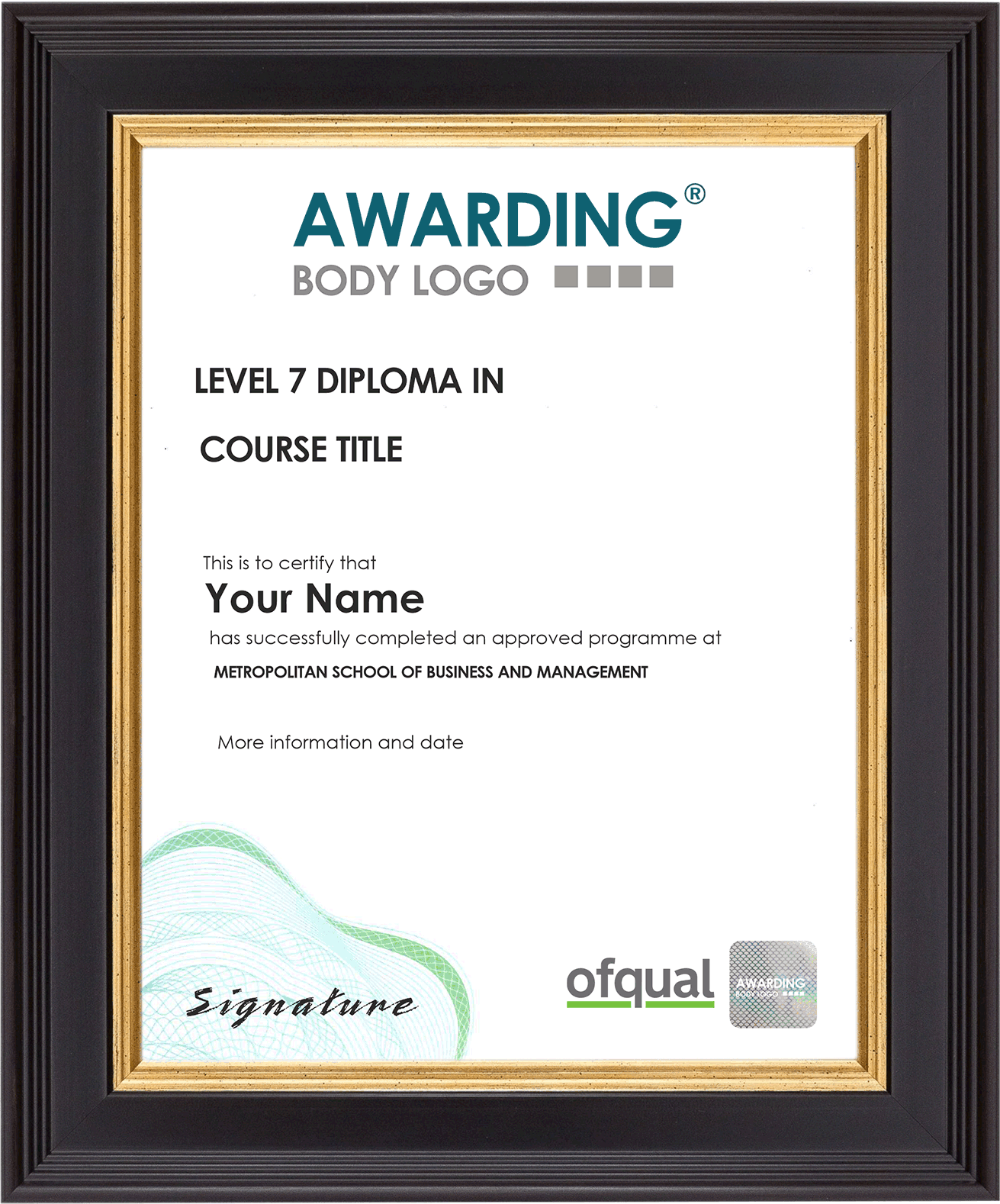
All MSBM courses are accredited by the relevant partners and awarding bodies. Please refer to
MSBM accreditation in about us for more details.
Entry Requirements
This course has no strict entry requirements. Students who hold an IPGD or SEMP following their bachelor's degree are eligible to enroll in the Master's Degree In Continuing Education In International Business Management Programme.
Course Modules
This module provides an understanding of the concepts and practices of strategic management in modern organizations. It focuses on analyzing the internal and external business environment to formulate effective strategies. Learners will explore strategic tools such as SWOT analysis, competitive advantage, and long-term planning. The module also examines how organizations like Apple and Amazon implement successful strategies in competitive markets. By the end of the module, students will be able to formulate, implement, and evaluate strategies that support sustainable organizational growth.
This module examines the role of leadership in shaping and implementing organizational strategy. It focuses on developing vision, strategic thinking, and decision-making skills required for effective leadership. Learners will explore leadership styles, change management, and stakeholder engagement in dynamic environments. The module also reviews strategic leadership practices used by organizations such as Microsoft and Tesla. By the end of the module, students will be able to apply strategic leadership principles to guide organizations toward long-term success.
This module examines how human resource management supports and drives organizational strategy. It focuses on workforce planning, talent development, performance management, and employee engagement. Learners will explore how strategic HR practices contribute to building sustainable competitive advantage. The module also reviews HR strategies implemented by global organizations such as Google and Unilever. By the end of the module, students will be able to design and implement HR strategies aligned with overall business objectives.
This module explores the development and implementation of long-term marketing strategies in competitive markets.
It focuses on market analysis, segmentation, targeting, positioning, and value creation. Learners will examine strategic tools used to identify opportunities and sustain competitive advantage. The module also analyzes strategic marketing practices of companies such as Apple and Procter & Gamble. By the end of the module, students will be able to design and evaluate marketing strategies that support organizational growth and market leadership.
This module examines how financial strategies support long-term organizational goals and sustainable growth. It focuses on financial planning, capital budgeting, investment analysis, and risk management. Learners will explore tools for financial decision-making, value creation, and performance evaluation. The module also reviews financial strategies adopted by organizations such as JPMorgan Chase and Goldman Sachs. By the end of the module, students will be able to apply strategic financial management techniques to support effective business decisions and competitiveness.
This module provides an in-depth understanding of advanced research methods used in business and management studies. It covers quantitative, qualitative, and mixed-method research designs for addressing complex organizational challenges. Learners will explore data collection, statistical analysis, and interpretation techniques using real-world business scenarios. The module also emphasizes research ethics, validity, reliability, and critical evaluation of academic literature. By the end of the module, students will be able to design, conduct, and critically analyze advanced business research projects to support strategic decision-making.
This module explores the structure, strategy, and operations of global business enterprises in an international context. It focuses on international trade, cross-border investment, and the challenges of operating in multiple markets. Learners will examine strategies for market entry, global supply chain management, and risk mitigation. The module also analyzes practices of multinational corporations such as Apple and Toyota. By the end of the module, students will be able to evaluate and develop strategies for successfully managing businesses in the global marketplace.
This module provides an overview of e-commerce concepts, strategies, and technologies in the digital economy. It focuses on online business models, digital marketing, payment systems, and supply chain management. Learners will explore website design, user experience, and data analytics to optimize e-commerce performance. The module also examines practices of leading e-commerce companies such as Amazon and Alibaba. By the end of the module, students will be able to develop, manage, and evaluate successful e-commerce strategies for competitive advantage.
This module explores the principles and practices of managing businesses in a global environment. It focuses on international trade, cross-cultural management, and global strategic decision-making. Learners will examine market entry strategies, global supply chains, and risk management in multinational operations. The module also analyzes practices of global corporations such as Unilever and Samsung. By the end of the module, students will be able to develop and implement strategies for effectively managing international business operations.
This module explores marketing strategies and practices in an international context. It focuses on understanding global markets, cultural differences, and consumer behavior across countries. Learners will examine international market entry strategies, branding, and global marketing mix adaptation. The module also analyzes approaches used by multinational companies such as Coca-Cola and Nike. By the end of the module, students will be able to design, implement, and evaluate effective international marketing strategies.
The thesis is a capstone research project that allows students to investigate a complex business issue in depth. Students apply critical thinking, research skills, and theoretical frameworks to solve real-world challenges. The process includes proposal development, literature review, data collection, analysis, and reporting. It culminates in a scholarly, professionally presented dissertation aligned with strategic business objectives
Workshops
Workshops are conducted through live webinars for online students.
Visa Requirements
There is no Visa requirement for this programme.